Helping brands increase conversions
DTC Growth + Creative Strategy for Beauty & Wellness Brands

Case study
One Hypothesis Changed What a Brand Believed About Creative
A DTC brand’s paid social had plateaued. Polished agency creative wasn’t converting. I tested a single UGC concept built around real human tension — and it rewrote their entire creative strategy.
The problem. Creative in rotation came primarily from outside agencies — polished, produced, and not converting. ROAS was stagnating at 0.79.
The hypothesis. The problem wasn’t the offer. It was the format. Audiences were tuning out content that looked like an ad. The question: if we introduce native-feeling UGC built around real tension, will relatability outperform polish?
The execution. Created a single low-production UGC video — intentionally casual, hook-first, shot to feel native to the platform. One angle: curiosity plus free gift. Tested directly against existing top performers.
| Spend | Sales | ROAS | CPA | |
|---|---|---|---|---|
| Video A | $6,400 | 68 | 2.46 | $42.70 |
| Video B | $1,500 | 26 | 1.94 | $57.00 |
| Video C | $8,200 | 118 | 1.82 | $68.00 |
| Combined | $16,100 | 212 | ~2.0 | ~$56 |
Case study — video strategy
Same Offer. Constant Testing. Three Winners.
A BOGO campaign run as a systematic creative testing sprint — iterating hooks, pattern interrupts, ASMR, and pacing until the numbers told us what worked. These are three of the ads that won.
| Video | ROAS | Hook rate | Hold rate | CTR | CVR | AOV |
|---|---|---|---|---|---|---|
| Liz B hook — 39 sec | 1.47 | 22.5% | 21.97% | 1.25% | 5.89% | $119.56 |
| BOGO deal — 41 sec | 1.46 | 49.2% | 27.1% | 2.25% | 4.84% | $113.62 |
| Frosting hook — 22 sec | 1.31 | 49.6% | 26.8% | — | 4.11% | $115.60 |
What the data showed: Hook rate and hold rate moved independently depending on the opening — the Frosting and BOGO hooks stopped more scrolls (49%+) but Liz B converted at the highest rate (5.89% CVR, 1.47 ROAS) despite a lower hook rate. The pattern was clear: a familiar, relatable opening built more purchase intent than a pattern interrupt alone.
The pattern. High thumbstop doesn’t guarantee high conversion. The Frosting and BOGO hooks stopped the scroll at nearly 50% — but the ad that converted best had a hook rate of 22.5%. The difference wasn’t the opening. It was the edit. Liz B is cut to upbeat music that makes it effortless to watch — the pacing pulls you through. That hold rate translated directly into the highest CVR and ROAS in the set.
The process. Each iteration tested one variable at a time — hook style, pacing, music, ASMR moments, pattern interrupt visuals. The goal wasn’t to find a winning ad. It was to understand which creative levers actually moved the needle on CVR and ROAS, not just thumbstop.
The direction. The data pointed toward a clear next test: take the high-thumbstop opening from the Frosting hook and pair it with the upbeat pacing and edit rhythm from Liz B.
Liz B hook — 39 sec
Frosting hook — 22 sec
Case study
A 0.6% Conversion Lift. A $6,574 Week.
Most teams skip copy testing because the numbers look small. At volume, it’s the highest ROI work in the funnel. Here’s what happens when you isolate variables instead of guessing.

The approach. Ran a focused copy testing sprint across 4 emails in a single week. Isolated variables to identify what was actually moving the needle — not what felt right in a creative review.
The result. Conversions increased 0.6% — which translated to $6,574.80 in incremental revenue in one week.
The insight. A sub-1% improvement sounds insignificant until you run the math at volume. Most teams skip copy testing because the lift looks small in isolation. That’s the mistake. The highest ROI work in the funnel is often invisible until you start measuring it.
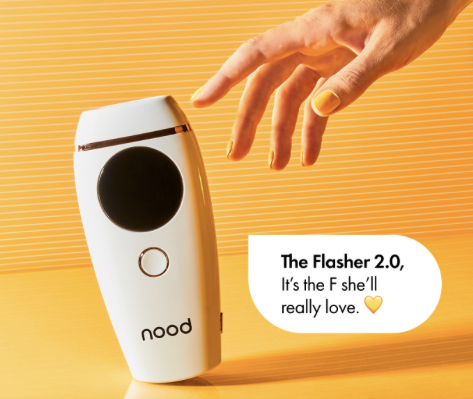
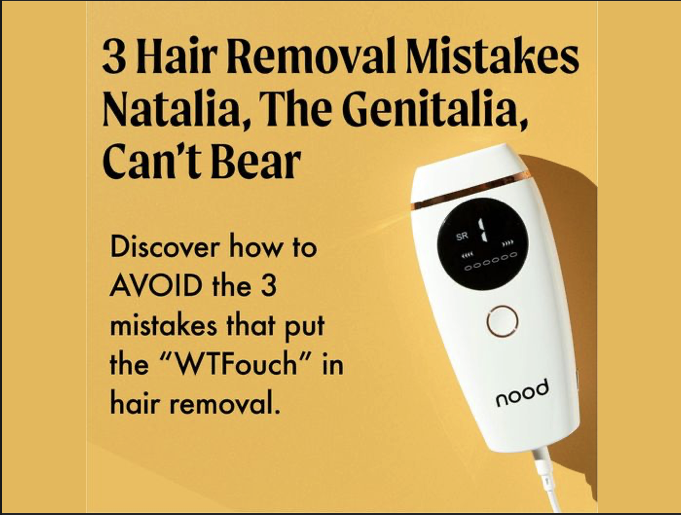
Three pieces for Nood — a retargeting ad, a Mother’s Day email, and a problem/solution email. All concept-led. All written to stop a scroll or open a wallet. One of them is technically about stalking.

Diagnosis in action — 01
This Took Five Minutes. Here’s What Most Teams Miss.
Two versions of the same ad. Same product, same offer, same audience. One converts. Here’s exactly why.


Trust & risk reversal. The physical badge is doing real work. It’s a visual object. It carries subconscious weight that plain text doesn’t. “60-Day Money-Back Guarantee” as a badge reads as a seal. The text-only version reads as a footnote. We process visual images 60,000x faster than text.
Hierarchy & breathing room. Ad 2 has clear visual zones: offer → proof → guarantee. The eye travels intentionally. Ad 1 is compressed — everything competes at roughly the same visual weight, which creates cognitive friction.
The before/after treatment. Ad 2 uses the full frame. The skin issue is visceral and undeniable, and the after is clean and smooth. In Ad 1, the before/after is shrunk to make room for nothing particularly valuable. The emotional contrast is the product — that’s what does the selling. Shrinking it kills the conversion mechanism.
“1 Day Only” vs. “Our Biggest Deal of the Year.” “1 Day Only” is urgency through scarcity — but also exposes the brand to legal risk if the sale doesn’t end in 24 hours. “Biggest Deal of the Year” is urgency through magnitude. It implies more value and feels less gimmicky to skeptical buyers.
Diagnosis in action — 02
Specificity vs. a Company Claim. One Converts. One Backfires.
The difference between “97% of real users” and “formulas validated by real results” is the difference between social proof and noise. Here’s why.


The trust. “97% of real users” vs. “Formulas validated by real results.” One is social proof with specificity. The other is a company claim. Buyers are trained to discount company claims automatically — they’ve heard them too many times.
Why the number wins. “97% of real users” does three things simultaneously: it implies a real study was conducted; it signals near-universal agreement; and it’s fast math — almost everyone loves it, only 3% weren’t happy. Those are good odds. That’s risk reduction happening in a split second.
Specificity implies methodology. Someone counted. Even if the buyer never consciously thinks that, the brain processes specific numbers as evidence and vague claims as opinion.
The company line actually backfires. “Formulas validated by real results” raises a quiet question in the buyer’s mind: as opposed to fake results? It signals nothing. It reassures no one.
Diagnosis in action — 03
When the Headline Is the Creative
Same audience. Same spend. Two different image approaches tested head-to-head on Meta. The winner wasn’t the polished product shot.

| CP Purchases | Link Clicks | Total Clicks | |
|---|---|---|---|
| Winner — copy-led | $54.38 | 150 | 800 |
| Control — product shot | $60.12 | 130 | 603 |
| Baseline avg | $147.66 | — | — |
Both ads beat the baseline by over 60%. But the copy-led creative won on every metric. Sometimes the image is the headline — and sometimes the headline is the image.
Creative brief — UGC
The Brief That Builds the Ad
A UGC brief should be so specific the creator never needs to improvise. Here’s a real brief — built around a validated angle, a specific avatar, and a narrative arc designed to convert.
Every year after 30, collagen declines. Skin gets dull, saggy, and loses that full plump appearance — and it’s not just the face. The body ages at the same rate. Thighs, arms, décolletage — all of it loses the collagen that keeps skin looking young.
The Vegan Collagen Booster Set works on three levels simultaneously:
- Retinol — the gold standard for younger-looking skin. Increases cellular turnover, minimizes expression lines, boosts collagen production. Smoother, clearer, glowier skin.
- Vitamin C — brightens, evens tone, fights environmental damage (pollution, sun). Rebuilds collagen and smooths hyperpigmentation for protected, plump skin.
- Plant Collagen Booster — soybean, quinoa, and rice bran extract support the skin’s natural collagen production. Firmer, smoother skin from the inside out.
Important: You can say products are derived from natural ingredients — do NOT say they are “all-natural.”
| Hook | Who it’s for | Direction note |
|---|---|---|
| “I hate to say this, but my skin is looking older.” | Anyone noticing early aging — vulnerable, relatable opener | Pause after “older.” Let the admission land. No performance — just honesty. |
| “Here’s how I smoothed over my fine lines and crinkles.” | Result-led — for audiences who respond to transformation | Lead with confidence. You already have the answer. You’re sharing it. |
| “How I got rid of my dry, crepey thigh skin.” | Body-focused — strong for the thigh/leg concern avatar | Be specific about the area. Specificity is what makes it feel real. |
| “This is how I made my whole body AND face look younger.” | Broadest appeal — face + body angle simultaneously | Emphasis on “whole body AND face” — that’s the differentiator vs. face-only products. |
| Beat | What to cover | Direction note |
|---|---|---|
| HOOK | Your specific skin concern — fine lines, dull skin, crepey legs, crow’s feet, smile lines. Name it. Be specific. | The more specific the problem, the more people recognize themselves in it. “Dry skin” is forgettable. “That dry, bumpy skin on the back of my thighs” is not. |
| PROBLEM | What you tried before that didn’t work. Over-the-counter products, generic moisturizers, anything that disappointed you. The frustration of spending money and not seeing a difference. | Don’t rush past this. This is where the viewer is nodding. She’s been here. Let her feel seen before you offer the solution. |
| DISCOVERY | How you found Truly — a friend, social media, a recommendation. Make it feel natural, not sponsored. | “My bestie has skin like she doesn’t age — so I stole her routine” is perfect. Use your real discovery story. |
| SENSORY | What it’s like to actually use it. The smell. The texture. The ritual of it. Make her want to experience it. | “It feels like a spa day.” “They smell so good you’d want to eat them.” Lead with the sensory experience before the results — this is Truly’s brand DNA. |
| RESULTS | What you actually noticed. Fine lines less visible. Skin looks plumper. Legs shine. Be specific about what changed and when. | Show it if you can — close-up on skin, before/after, the visual proof. A result you can see is worth more than one you can describe. |
| DEAL + CTA | The Vegan Collagen Booster Set is on massive sale — $409.50 MSRP down to $143.60. The trunk alone is worth more than the sale price. Link in bio. | Hype the deal. This is genuinely extraordinary value. She’d be passing up a free trunk. Say that. |
Truly is young, hip, and colorful — but above all, trendy and cool. Aspirational for the average woman in a fun, attainable way. The coolest place in the beauty world.
The products delight every sense — smell, visual, touch. Routines turn shower time into a luxurious million-dollar experience. Every woman deserves a bit of luxury.
- Luxurious body routines
- Supermodel-endorsed products
- Clean, vegan, and cruelty-free
- As seen in InStyle, Allure, Elle
- 100,000+ happy customers
- Always vegan and Leaping Bunny certified
Tone: Warm, excited, like you’re telling your best friend about something you genuinely love. Not an ad. A recommendation.
Every brief starts with the data. Every concept starts with a real person who has a real problem and has already tried to solve it and failed. That’s where the creative lives — not in the feature list.